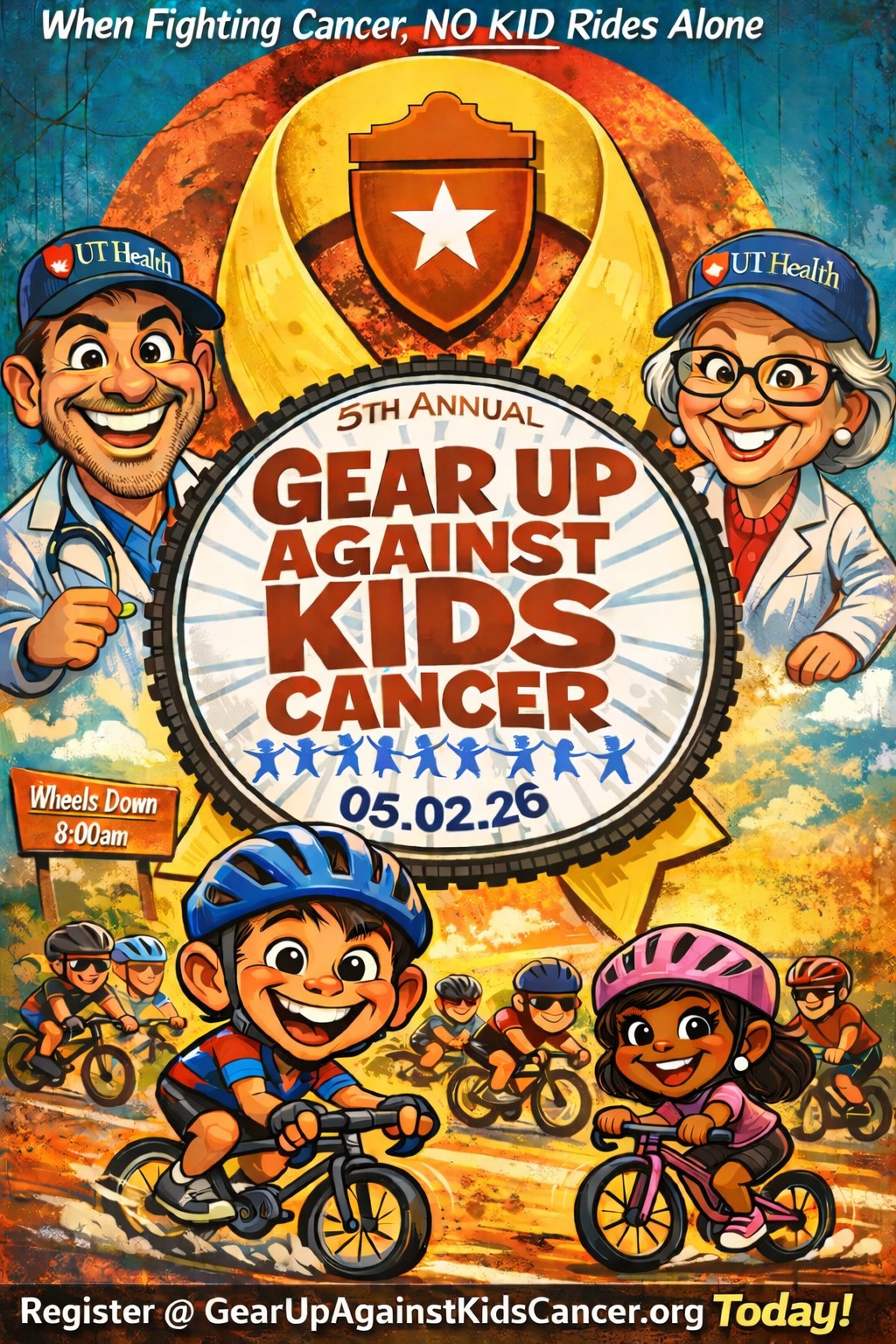
Gear Up 2026 Photos are Now Available!


Click on the image above or the link below to download your favorite images from this year’s Gear Up Against Kids Cancer bike ride!

https://uthscsa.app.box.com/folder/380870732728?s=1f1pl55wymd83nd81n28y8dkxzbrxub8&sortColumn=date&sortDirection=ASC

Social media posting request:

If you post any images to your social media pages, please use one or more of the following hashtags:

#GearUpAgainstKidsCancer
#GearUp2026
#NoKidRidesAlone
#RideForACure
#EndChildhoodCancer
#CyclingForACause
#RideSanAntonio
#CancerResearchSavesLives
#PedalForKids
#GCCRI


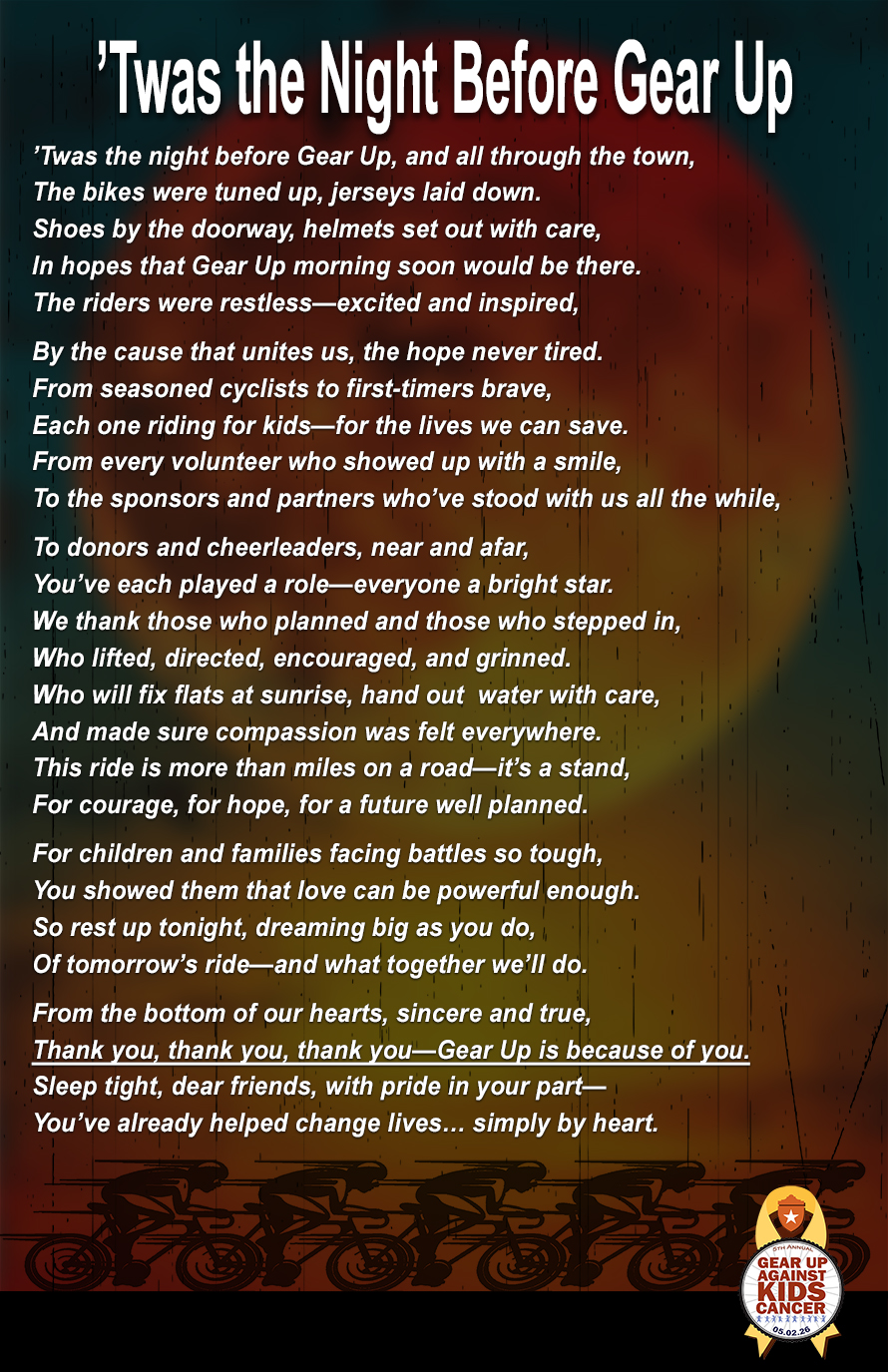
Thank you!! Thank you!! Thank you!! Thank you!!

Thank you to everyone who helped make the 5th Annual Gear Up Against Kids Cancer bike ride such an incredible success. From our riders and volunteers to our sponsors and community partners, your energy, generosity, and commitment truly brought this event to life. Because of you, we are able to continue advancing the mission of the Greehey Children’s Cancer Research Institute at UT Health San Antonio.

Year after year, this ride reflects the power of community and a shared belief that no child should have to face cancer alone. Your support directly fuels lifesaving research and helps move us closer to breakthroughs that give hope to children and families facing cancer. Together, we are making a lasting impact—one mile at a time.

We are deeply grateful for your continued support and are already looking ahead with excitement. We hope you’ll join us again for the 6th Annual Gear Up Against Kids Cancer bike ride on Saturday, May 1, 2027—it’s going to be another unforgettable ride!


When Fighting Cancer, No Kid Rides Alone: 100,000 Professionals Riding Every Mile with Kids and Families


Childhood cancer research and care rely on a broad, multidisciplinary workforce. In the United States, nearly 100K professionals work across 13 major job categories, supporting everything from bedside care and laboratory research to clinical trials, data analysis, survivorship, and advocacy. 

Below is a category‑by‑category breakdown, with sources and clear assumptions.

Estimated U.S. Employment by Category.

⚠️ These are order‑of‑magnitude estimates, not exact counts. Ranges reflect part‑time roles, research effort %, and mixed adult/pediatric positions.

  1. Physicians & Advanced Medical Providers   4,000–5,000
  • 2,200–2,500 board‑certified pediatric hematologist‑oncologists
  • 500–700 pediatric oncology APPs (NPs/PAs)
  • 600–800 subspecialists (BMT, neuro‑oncology, radiation, survivorship)

Sources: ASPHO & ABP workforce surveys; AAP Pediatrics workforce modeling [publications.aap.org], [The Americ…kforce …]

  1. Nursing & Direct Patient Care     25,000–30,000
    • Pediatric oncology inpatient & outpatient nurses
    • Infusion nurses, research nurses, nurse managers, PCTs
    • Pediatric oncology is a small subspecialty within nursing, but every pediatric cancer program employs dozens to hundreds of nurses.

Sources: HRSA workforce data; APHON; hospital staffing ratios [bhw.hrsa.gov], [aphon.org]

  1. Laboratory & Bench Scientists     12,000–15,000
  • Principal Investigators, staff scientists, postdocs, lab techs
  • Basic, translational, and pre‑clinical pediatric cancer research
  • COG alone involves 10,000+ scientific experts globally, with the majority in the U.S.

Sources: Children’s Oncology Group; NCI Pediatric Oncology Branch [datacatalo…cancer.gov], [ccr.cancer.gov]

  1. Clinical Research Operations 9,000–11,000
  • Clinical research coordinators
  • Trial managers, CRAs, study start‑up staff
  • Every COG or NCI‑sponsored trial requires multiple full‑time research staff.

Sources: COG network size; NIH clinical trials infrastructure [datacatalo…cancer.gov], [stjude.org]

5. Data Science & Biostatistics     3,000–4,000
  • Biostatisticians
  • Bioinformaticians
  • Clinical data managers

Sources: St. Jude, Fred Hutch, NCI workforce models [fredhutch.org], [ccr.cancer.gov]

  1. Pharmacy & Drug Development 2,000–3,000
  • Pediatric oncology pharmacists
  • IDS pharmacists
  • GMP manufacturing & PK scientists

Sources: Oncology pharmacist workforce studies; NCI GMP programs [pmc.ncbi.nlm.nih.gov], [stjude.org]

  1. Psychosocial & Mental Health Services    6,000–8,000
  • Social workers
  • Psychologists
  • Child life specialists
  • Counselors and psychiatrists
  • National pediatric cancer care standards require psychosocial staffing.

Sources: COG supportive care guidelines; HRSA behavioral health data [phi.org], [bhw.hrsa.gov]

  1. Rehabilitation, Survivorship & Support Therapies     5,000–6,000
  • PT, OT, SLP
  • Survivorship program staff
  • Nutritionists and late‑effects specialists
  • Survivor population >500,000 in the U.S., driving workforce demand.

Sources: NCI survivorship data; pediatric rehab Workforce [cancer.gov], [Careers in…aspho.org]

  1. Genetics & Counseling     1,500–2,000
  • Genetic counselors
  • Genomics program staff

Sources: National Society of Genetic Counselors; pediatric oncology program staffing [fredhutch.org], [cancer.gov]

  1. Public Health, Prevention & Education     2,500–3,500
  • Public health scientists
  • Community engagement and outreach staff
  • Implementation scientists

Sources: NCI Childhood Cancer Data Initiative; community health workforce data [nccrdatapl…cancer.gov], [phi.org]

  1. Administration, Finance & Compliance     8,000–10,000
  • Research administrators
  • Grants & finance staff
  • Regulatory and IRB professionals
  • Clinical trials are administratively labor‑intensive.

Sources: NIH grants administration ratios; large academic health systems [bhw.hrsa.gov], [stjude.org]

  1. Advocacy, Fundraising & Policy     2,000–3,000
  • Nonprofit staff
  • Government relations
  • Foundation and development teams

Sources: CureSearch, CCRF, ALSAC (St. Jude) employment data [curesearch.org], [childrenscancer.org]

  1. Education & Training 2,000–2,500
  • Fellowship & residency faculty
  • Training grant staff (T32, K12)
  • Medical educators

Sources: ACGME, ABP, NCI training programs [abp.org], [orit.resea…ch.bcm.edu]

Overall, meeting future needs will require coordinated investment across clinical care, research infrastructure, workforce well‑being, and training to ensure that scientific advances translate equitably into improved outcomes for children and families.


Early Packet Pickup Date and Group Ride Safety Tips

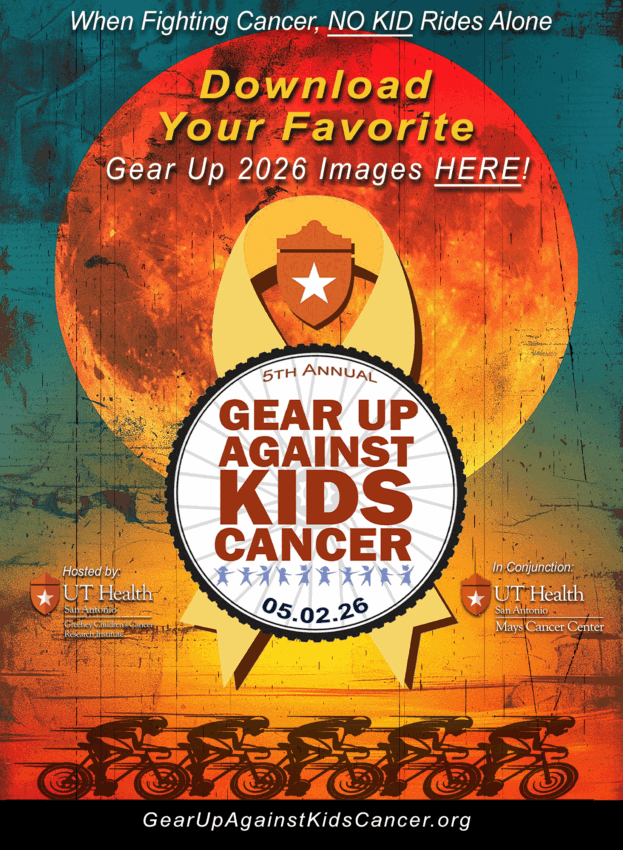
Gear Up ’26 Early Packet Pickup

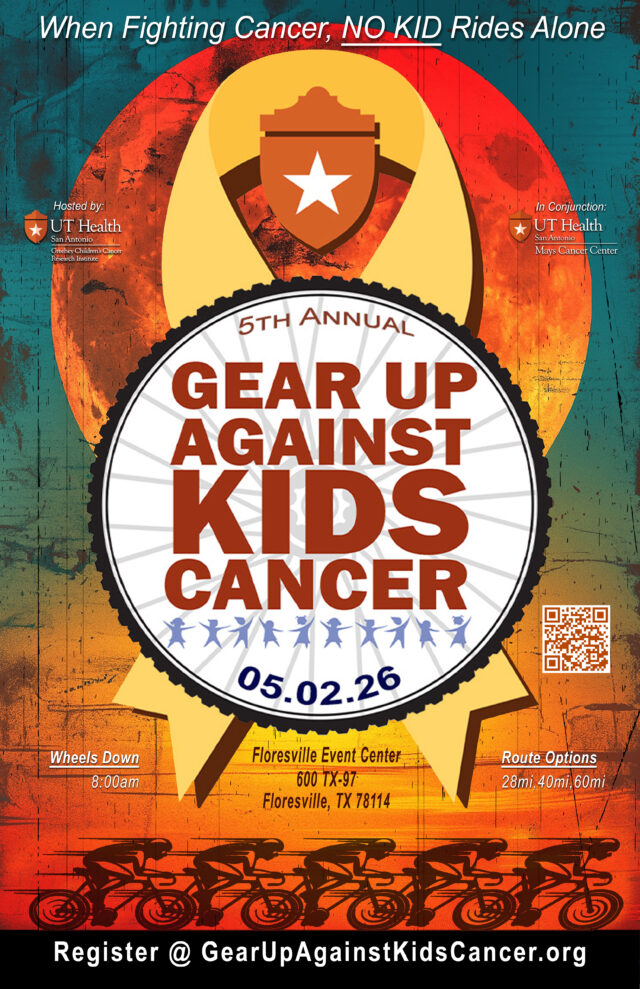
We’re excited to share an important update regarding early packet pickup for the upcoming Gear Up Against Kids Cancer on Saturday, May 2, 2026.

Early packet pickup will take place at:
REI Community Room
11745 IH-10 W, Ste 110
San Antonio, TX 78230

📅 Date: April 29
Time: 4:00 PM – 9:00 PM

Please plan to visit REI during early packet pickup to collect your event materials.

Packet pickup will be available the day of the ride, starting at 6:00 am.

Thank you for helping make this an amazing event—we look forward to seeing you soon!

Best regards,
Gear Up Against Kids Cancer Team


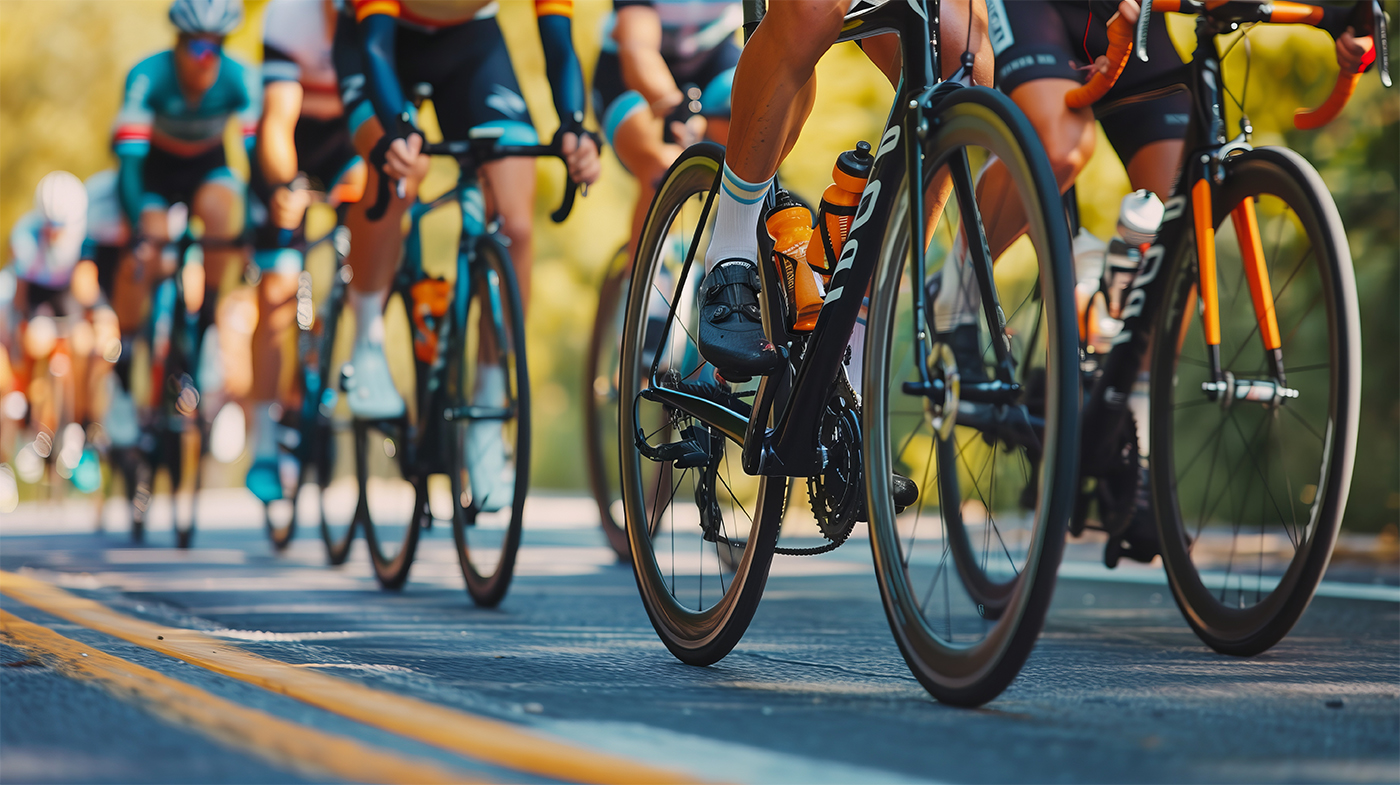
Group rides are one of the greatest parts of cycling—they strengthen community, boost fitness, and make long miles feel lighter. They also depend on teamwork and awareness. One of the simplest and most important ways to help keep a group ride smooth and safe is by maintaining your position in line. Below, you’ll find key reasons why holding your place matters and how it supports a safer, more enjoyable experience for everyone on the route.

🚴‍♂️ 1. Safety for Everyone
A predictable group is a safe group. When riders hold a steady line:

  • There’s less chance of wheels overlapping
  • Sudden swerves or abrupt braking are avoided
  • Riders can anticipate movements and react confidently
  • Even small deviations can ripple backward, causing near misses or crashes.

🚴‍♂️ 2. Better Drafting and Energy Conservation

Group riding works because of drafting—the reduced wind resistance from another rider.

  • When everyone holds a straight, consistent line, Riders behind you benefit from a clean draft
  • You avoid creating gaps or forcing others to chase The group maintains smoother, more efficient pacing
  • A steady paceline means everyone saves energy and can ride stronger together.

🚴‍♂️ 3. Clear Communication
A predictable line helps signals travel backward quickly and reliably.

Whether it’s:

  • Hand signals for road hazards
  • Verbal cues (“Slowing!” “Car back!”)
  • Rotations through a paceline
  • All of these work better when riders stay aligned.

🚴‍♂️ 4. Respect for Other Road Users
A clean, disciplined line:

  • Takes up less space on the road
  • It is easier for cars to pass safely
  • Demonstrates courtesy to drivers and pedestrians
    A group that spreads unpredictably across the road not only frustrates motorists but also increases the risk for the entire ride.

🚴‍♂️ 5. Helps Build Trust in the Group
Smooth group rides depend on trust. Holding your line shows other riders that:

  • You’re attentive
  • You’re predictable
  • You’re committed to the group’s safety
  • This builds confidence and camaraderie — the foundation of enjoyable group cycling.

🚴‍♂️ 6. Reduces “Accordion” Effects
When riders drift or brake unexpectedly, the riders behind them overreact, causing:

  • Sudden speed changes
  • Gaps in the group
  • Hard accelerations to catch up
  • Staying in line minimizes these surges, keeping the group tighter and the ride more comfortable.

7. 🚴‍♀️ Tips for Holding Your Line

  • Look ahead, not at your front wheel
  • Relax your upper body to avoid twitchy movements
  • Keep your hands near the brakes in a tight group
  • Avoid sudden swerves — go around obstacles gradually
  • If you must leave the line, signal clearly first

🚴‍♂️ Conclusion
Group rides work best when everyone rides smoothly, predictably, and respectfully. Staying in line isn’t just good etiquette — it’s a fundamental skill that keeps the group safer, more efficient, and more enjoyable for every rider involved.

________________________________________


Turn Your Gear Up Against Kids Cancer Registration into a FREE Entry!

Did you know that once you’re registered for the 2026 Gear Up Against Kids Cancer Bike Ride, you can make your impact — and your ride — even bigger by inviting friends to join you?

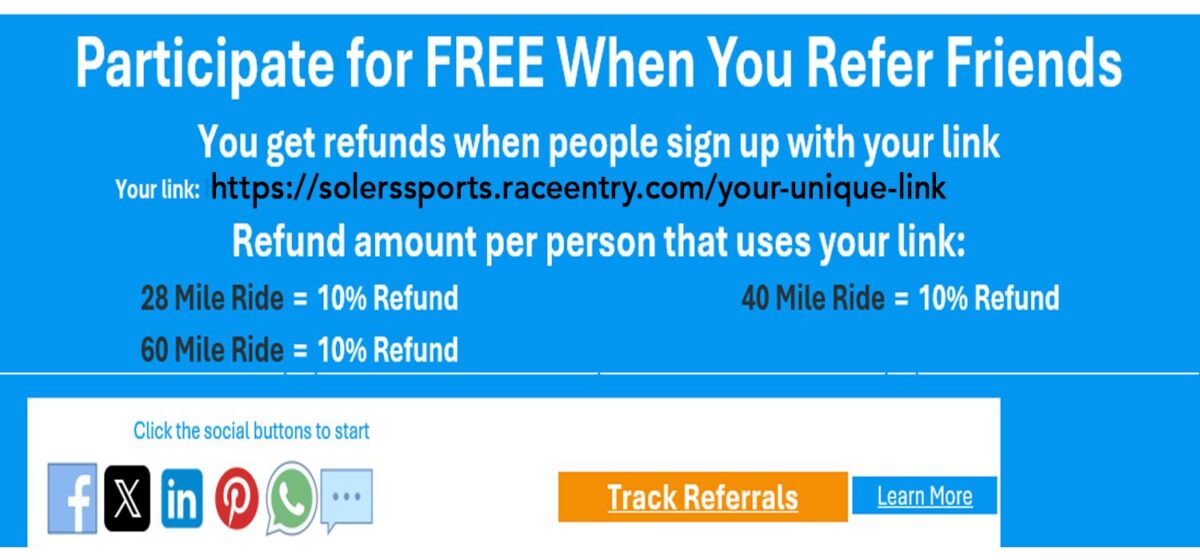
That’s right: for every rider who registers using your personal referral link (which will appear at the bottom of your confirmation email), you’ll receive a 10% refund on your registration fee.


💸 How the Referral Program Works
After you register, simply share your referral link (via email, text, or social media). When someone signs up using your link, you automatically receive a 10% refund. The more friends who ride, the more you earn — it’s that simple.

Not only are you saving on your registration, but you’re also helping support life‑changing pediatric cancer research at the Greehey Children’s Cancer Research Institute.

Together, we can ride farther, raise more, and make a real difference — one mile and one referral at a time. Thank you for riding for kids who need us most! 💛

Sign up today at GearUpAgainstKidsCancer.org!


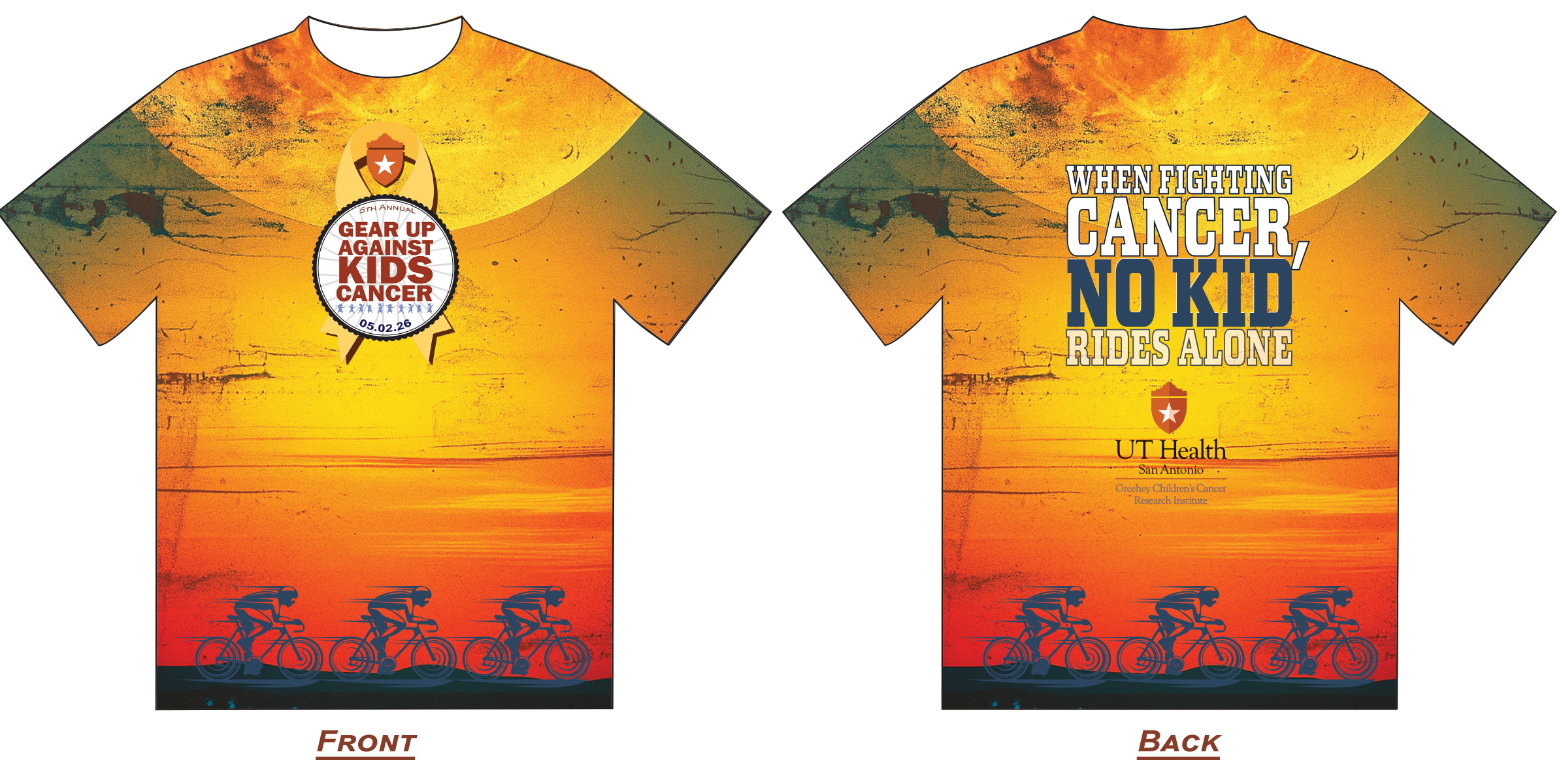
Get ready to gear up in style—because the official 2026 Gear Up Against Kids Cancer PARTICIPANT SHIRT has just been revealed! 🎉💥

🔥🚴‍♂️ IT’S HERE! IT’S FINALLY HERE! 🚴‍♀️🔥


This year’s Gear Up shirt isn’t just apparel…
It’s a badge of courage, a symbol of hope, and a statement that YOU ride for kids fighting cancer. 💛🎗️

⚡️ Bold design.
⚡️ Ultra‑fresh color.
⚡️ Made for riders, fighters, survivors, and supporters.

Whether you’re crushing miles, cheering from the sidelines, or honoring someone you love—this shirt says it ALL. 💪

✨ Wear it proudly! Wear it loud! Wear it for the kids! ✨
Let’s make this year’s ride the BIGGEST and MOST IMPACTFUL yet!

🏁 GEAR UP. SHOW UP. CURE UP.
#GearUpAgainstKidsCancer #RideForACause #UTHealthSanAntonio #PedalForHope #KidsCancerAwareness


The Importance of Staying in Line During a Group Ride

Group rides are one of the best parts of cycling — they build community, improve fitness, and make long miles feel easier. But they also require teamwork and awareness. One of the simplest and most important ways to keep a group ride smooth and safe is by staying in line.  Below are key reasons why holding your position matters, along with the benefits it brings to every rider around you.

🚴‍♂️ 1. Safety for Everyone

A predictable group is a safe group. When riders hold a steady line:

  • There’s less chance of wheels overlapping
  • Sudden swerves or abrupt braking are avoided
  • Riders can anticipate movements and react confidently
  • Even small deviations can ripple backward, causing near misses or crashes.
🚴‍♂️ 2. Better Drafting and Energy Conservation

Group riding works because of drafting — the reduced wind resistance behind another rider.  When everyone holds a straight, consistent line:

  • Riders behind you benefit from a clean draft
  • You avoid creating gaps or forcing others to chase
  • The group maintains smoother, more efficient pacing
  • A steady paceline means everyone saves energy and can ride stronger together.
🚴‍♂️ 3. Clear Communication

A predictable line helps signals travel backward quickly and reliably.  Whether it’s:

  • Hand signals for road hazards
  • Verbal cues (“Slowing!” “Car back!”)
  • Rotations through a paceline
  • All of these work better when riders stay aligned.
🚴‍♂️ 4. Respect for Other Road Users

A clean, disciplined line:

  • Takes up less space on the road
  • It is easier for cars to pass safely
  • Demonstrates courtesy to drivers and pedestrians
  • A group that spreads unpredictably across the road not only frustrates motorists but also increases the risk for the entire ride.
🚴‍♂️ 5. Helps Build Trust in the Group

Smooth group rides depend on trust. Holding your line shows other riders that:

  • You’re attentive
  • You’re predictable
  • You’re committed to the group’s safety
  • This builds confidence and camaraderie — the foundation of enjoyable group cycling.
🚴‍♂️ 6. Reduces “Accordion” Effects

When riders drift or brake unexpectedly, the riders behind them overreact, causing:

  • Sudden speed changes
  • Gaps in the group
  • Hard accelerations to catch up
  • Staying in line minimizes these surges, keeping the group tighter and the ride more comfortable.
🚴‍♀️ Tips for Holding Your Line
  • Look ahead, not at your front wheel
  • Relax your upper body to avoid twitchy movements
  • Keep your hands near the brakes in a tight group
  • Avoid sudden swerves — go around obstacles gradually
  • If you must leave the line, signal clearly first
🚴‍♂️ Conclusion

Group rides work best when everyone rides smoothly, predictably, and respectfully. Staying in line isn’t just good etiquette — it’s a fundamental skill that keeps the group safer, more efficient, and more enjoyable for every rider involved.


🚴‍♀️ Register Early & Save—Gear Up Against Kids Cancer Ride

Don’t miss your chance to save on the Gear Up Against Kids Cancer Bike Ride!

Early‑bird registration is just $50—but only for a limited time. After the early‑bird period ends, the registration fee increases by $20, about the cost of a new pair of cycling gloves.

Register now to:

  • Lock in the $50 early‑bird rate
  • Guarantee your Gear Up ’26 event shirt
  • Support vital childhood cancer research at Greehey CCRI

Time passes quickly — don’t wait—register early and ride for a great cause!

Register today: GearUpAgainstKidsCancer.org

See you on the ride!